


The Current State of Land-Based Sharking
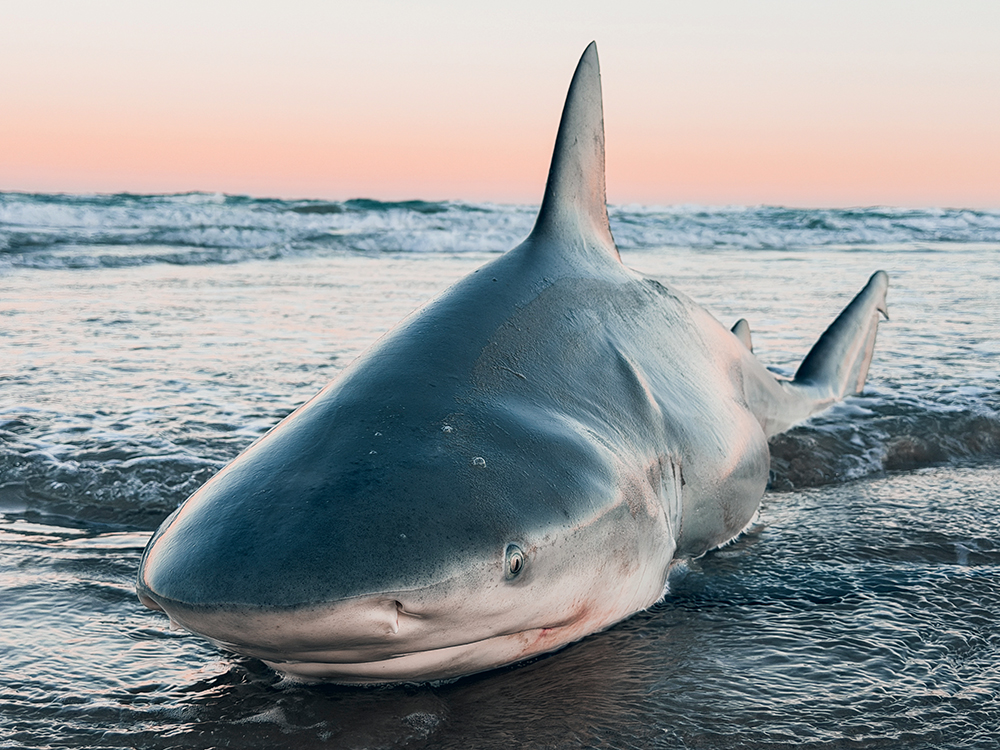
We live in a time of constant change, specifically in the world of land-based sharking. As someone who's been dedicated to targeting toothy critters from the sand for over 25 years now, I've made a lifestyle out of chasing thousand-pound sea monsters. I've seen plenty of changes during these decades spent on the beach. Rules, regulations, technologies, methods and tackle have all evolved significantly. I wonder where this all will lead, as more time passes.
Texas anglers have been catching sharks from our beaches for about a century. Historically, Padre Island has been the coastline mecca for sharkers, for a variety of good reasons. Due to the geographical layout of our coast, the strong winds we endure create favorable currents along the many miles of this, the world's longest undeveloped barrier island. Deep water lies closer to shore in South Texas than farther up the coast; the continental shelf is closest to the coast in this part of the state. Big sharks don't have to travel far from the depths of the open ocean to reach the PINS beach. This entire region has long been a fish haven and is regarded as one of the best surf fisheries in the entire Gulf.
For decades, a few dedicated sharkers landed a few true behemoths from various Texas jetties. The so-called golden era of shark fishing in Texas occurred from the late-1950s to the end of the 1970s. This was a time when the waters off the Texas coast held peak numbers of big sharks swimming within reach of people fishing from land. Though I encounter people today who say we have more sharks than ever to target, I'd argue they're wrong. Because we have so many to target, we have greater numbers of people fishing for sharks today. Hence; more are caught than ever before. But undoubtedly, during the decades in the middle of the 20th Century, many more sharks swam in the Gulf in general, and in Texas waters, than they do today.
Texas anglers in the 60s could easily catch multiple big sharks on the same day, using what now seems like clumsy fishing gear and swimming or rafting bloody shark baits impressive distances out from the beach. Putting the technologies, tackle and methods used today in play back then would no doubt have resulted in catches unheard of now. During the 80s and 90s, the numbers of pioneering shark anglers dwindled. Many of the original expert sharkers became too old to participate regularly in a sport with such a strong physical component. Eventually, they passed through the golden gate, to the final beach.
For some time, a smaller number of sharking enthusiasts came along to replace them. By the early-90s, the state of the world's (and the Gulf's) shark fishery reached an all-time low. The fishery had been abused for years by then; people slayed sharks for self-aggrandizing photos, to make trophies of their jaws and worse, they killed some purely for spite, in response to irrational fears. Long-liners from many nations began to target sharks for their fins, to quell the appetites of Asian markets, where shark-fin soup is considered a delicacy. Mexican gill-nets washed ashore on Padre Island from time to time, full of dead sharks. All these factors decimated big-shark populations.
To try and recover from this sickening, short-sighted war on sharks, officials began to implement and enforce regulations around the turn of the 21st century, hoping to save the fishery. Both state and federal officials helped put pressure on illegal foreign activity in our waters. As we approached the 2020s, I began to document evidence of a recovering shark fishery, an improved one, but still with lower numbers of fish than we had during the glory days. We aren't catching big numbers of giant sharks anymore, but we do encounter them more regularly than we did during the worst of times. When I started fishing the beaches seriously for big sharks around 2000, it took me multiple years of dedicated sharking to finally catch my first truly big tiger. These days, I encounter them much more regularly. In those days, kayaking baits was the optimal deployment method. Today's methods of bait-deployment make the idea of kayaking baits seem crude, at best.
Perhaps the most important change in the sharking world since the beginning of the 21st Century came with the dawn of social media. Now, anglers share photos of their catches and videos of their adventures with thousands of others, soon after the events happen. The concept of monkey see-monkey do becomes real in such a world. After seeing someone post photos of sharks caught from the beach, other people want to catch some of their own. During the early 2000s, in a span of a few years, the number of people participating in the sport grew almost exponentially.
During this time of rapid growth in interest, technological advancements contributed to the evolution of the sport. New, giant aluminum fishing reels paired with high-quality braided lines provided a major advantage to sharkers, when compared with old, traditional Senator-class reels spooled with monofilament lines. The gear finally gave anglers the edge in their fights with these beasts. Additionally, because of the increased interest, bait shops began stocking many of the best baits known to attract monster sharks in fresh form. Then, the ability to vacuum-seal quality shark baits of all kinds gave anglers another useful tool to use in the quest.
In present times, copious numbers of skilled anglers flood our state's beaches, many of whom first noticed the sport while scrolling through Facebook and Instagram on their phones. Many of these new-age sharkers use drones to deploy their baits well offshore. Some can send baits weighing as much as ten pounds hundreds of yards from the beach. Surely, the use of drones is a double-edged sword, with both positive and negative aspects. Recently, the federal wildlife management agencies have tried to ban the use of drones for fishing, but they did so with a vaguely worded law. State game wardens have been all over the place on the issue, with some issuing tickets, others not enforcing the law. I expect a clear resolution, official decision and public declaration on the use of drones in the near future.
Meanwhile, our fishery remains in a state of recovery. Big sharks are now being caught frequently, partly because more people than ever are targeting them, using ever-improving equipment and methods. Offshore enforcement of illegal activity has dramatically reduced the harm to sharks. While we still have an established problem with shrimpers illegally and discretely finning sharks, sending them to Mexican ports and shipping them to Asia, this problem is currently being addressed by multiple enforcement agencies.
With any luck, we'll see more and more interest develop for targeting big sharks from the beach. Many people have now experienced the magic of an up-close and personal encounter with one of the ocean's true monsters. Maybe the ugly habits humans have historically displayed when dealing with sharks will give way to the respectful concept of catch, photo and release, and we can populate a world in which all anglers learn to respect the strength and beauty of this enchanting family of apex predators.