
The Great Texas Mullet Migration

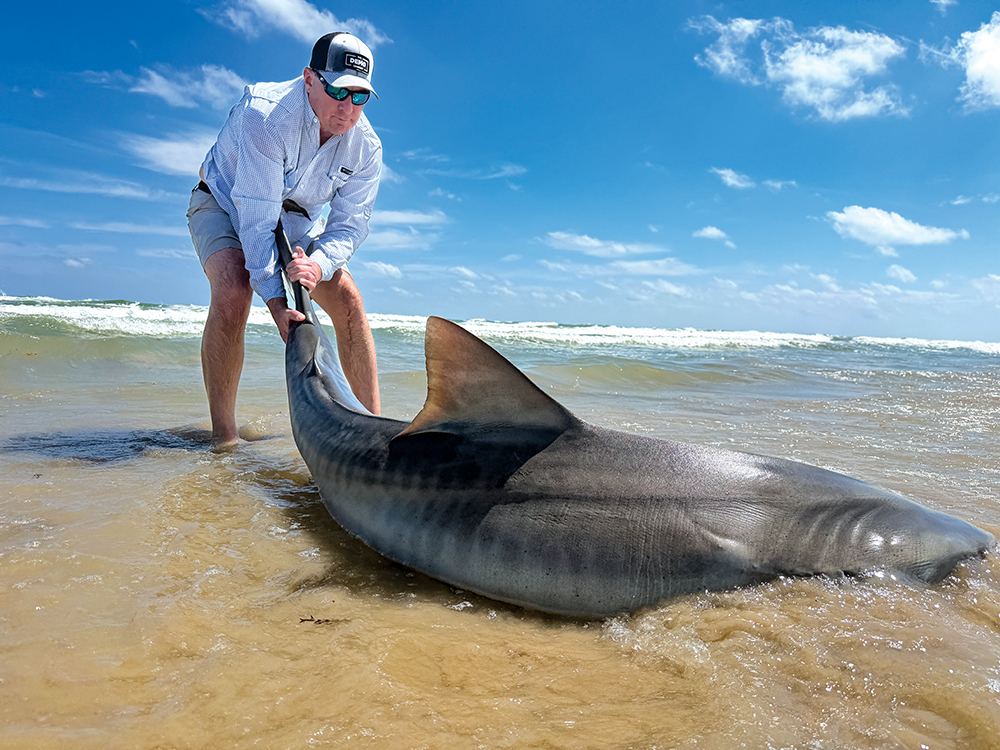
Coastal anglers keenly watch over some natural events with focus, anticipation and excitement. One of these is the annual fall bait migration along the Texas coastline. This time of year, several species populate the waters close to our beaches, from the Brownsville Channel all the way to Sabine Pass.
The approach of autumn triggers these events, which generate a massive reaction within the food chain. Starting in late-August, the dusky anchovies begin their nearshore migration, attracting the attention of an uncanny number of predators, including skipjacks, Spanish mackerel, speckled trout, tarpon and sharks. Massive congregations, or bait-balls, consisting of anchovies no more than two inches long, may include over a million individual fish, some as large as a typical backyard swimming pool.
As the calendar moves into October, we start to see random schools of menhaden patrolling the beaches. Predators like tarpon love to feast on these oily shad. Usually by Halloween, certainly by early-November, we get the migration every dedicated surf angler eagerly awaits—the mullet migration.
Our striped mullet, Mugil cephalus, ranks high among the most common species of baitfish in the Texas saltwater ecosystem. They can be found in bays, bayous, and rivers, also at the surf and well offshore, moving among these locations during various stages of their lives. Many anglers who target reds, flounder and trout think of mullet as prime baits to use.
The great Texas mullet migration begins when schools of these fish start trickling out of the bays and into the Gulf, where they typically turn and move along the beachfront. Later, huge numbers of larger, mature specimens head offshore to spawn. During the spawning season, from October through January, Texas Parks and Wildlife regulates the harvest of these breeders, only allowing anglers to harvest mullet for bait measuring less than twelve inches, with the goal of ensuring a healthy crop of offspring and sustaining this vital species.
Nearly all predatory fish in Texas will eat mullet, so it's tough to be a mullet! Different predators tend to prefer mullet of different sizes. In the backwaters and bays, juvenile “finger mullet” are susceptible to predators like trout, redfish and flounder. As they get larger, larger predators, like adult redfish, jacks and tarpon tend to target mullet at least six inches long.
In more open waters, like around the jetties, in the surf and in nearshore waters, mullet use a simple strategy to try and avoid all the predators they encounter; they stick together in compact schools, creating bait-trains of epic proportions. On some autumn days along the Texas coast, the fabled mullet trains pass through the surf zone for hours. A constant flow of mullet swimming shoulder to shoulder, nose to tail, in uncountable numbers. This strategy allows the majority of the fish to survive the gauntlet, but plenty become victims too, consumed by large, hungry predators.
This incredible spectacle helps make November one of my absolute favorite months to fish the Texas beaches. Catching mullet on every cast with a good net generally happens on a daily basis this time of year. I utilize mullet for cast-out baits, often targeting either reds or jack crevalle with them. My favorite setup is using the Catch Sharks Drum Master leaders with the tooth-proof trace, which are available on catchsharks.com.
I personally don't harvest many redfish for myself, but on my charters we may target them if clients want to keep a few to take home to eat. On days soon after the passage of a cold front, I like to cast out mullet in the early-morning hours, targeting jack crevalle. Jacks are arguably, pound for pound, the hardest fighting fish we have. They are an absolute blast for my clients to reel in, especially the kids. In addition, jacks are also one of the top-tier shark baits, so catching them kills two birds with one stone.
I like to use mullet ranging from six to about eight inches long, an attractive size for several different kinds of predators. Reds, jacks, trout, sharks and tarpon will all take mullet in this size range. Nearly all tarpon caught in the Texas surf bite mullet, with skipjacks accounting for the rest. While I've hooked and caught quite a few tarpon at the jetties, I've landed just a few from the surf. Most of these were bycatch, caught while I targeted reds or other species.
To hook and land a tarpon from the Texas surf is indeed a memorable accomplishment. A more reliable way to target them is to fish the channels at Port Aransas or Port Mansfield on a late-afternoon outgoing tide. Free lining a live mullet in those places creates a good chance at an encounter with a tarpon. While some people dangle their mullet under some type of float, I've had better luck simply tossing them in the current and letting them swim freely. Those who do hook a tarpon should remember the age-old saying, "bow to the king" to reduce the chances the fish will throw the hook when it breaches the water and shakes its head.
In addition to the silver kings, other attractive species will attack mullet presented to them in the surf. Toothy critters like bluefish and both Spanish and king mackerel will devour live mullet. At times, mullet will produce easy limits of the Spanish macks. These mackerel are among the most underrated fish in terms of their edibility. Whether baked, grilled or smoked, they taste incredible. Perhaps one of the biggest culinary secrets in the seafood arena is how delicious Spanish mackerel tastes when eaten raw. Prepared like sushi, the flesh of these macks has a similar texture to wahoo and tastes just about as good.
If lots of Spanish mackerel show up in a place, a large, stray kingfish might be swimming among them. The larger cousins of the Spanish macks, kings can reach weights over fifty pounds. I once had a charter client catch a massive king on a live mullet, and the fight became a welcome and delightful surprise. Events like those add to the list of possibilities for anglers using the alluring mullet for bait.
Many benefits arrive from all these migrations, particularly the mullet. Anglers plan trips to the beach with great anticipation this time of year. As of this writing, our fishery appears to be in great shape; plenty of baitfish of various types populate our waters. I'm excited to fish these days; the beachfront fishing is often great all the way through the Thanksgiving and Christmas holidays. Those who crave steady action with the chance at a dose of chaos should book soon and come join me for an exciting adventure.