
The Most Wonderful Time of the Year

I can’t think of an easier month for sight-fishing redfish on the Texas coast than November. By this month, cold fronts (hopefully) are on a consistent schedule that makes catching very predictable. That’s a bold statement I know, but when you’ve seen it play out as many times as I have it’s like taking candy from babies. There are several factors that make it easy.
Most years, shrimp are still the primary forage of redfish in November. Knowing this narrows down your fly or lure selection immediately. Now I will say that some days they’re feeding so aggressively that it really doesn’t matter what you throw. Other times you really have to match the hatch or generally downsize your offerings. That can greatly depend on how much they’ve fed over the last couple of days. More often than not this month, however; they’re feeding. Nature programs them to take advantage of the abundance of forage before options become less available in the winter months.
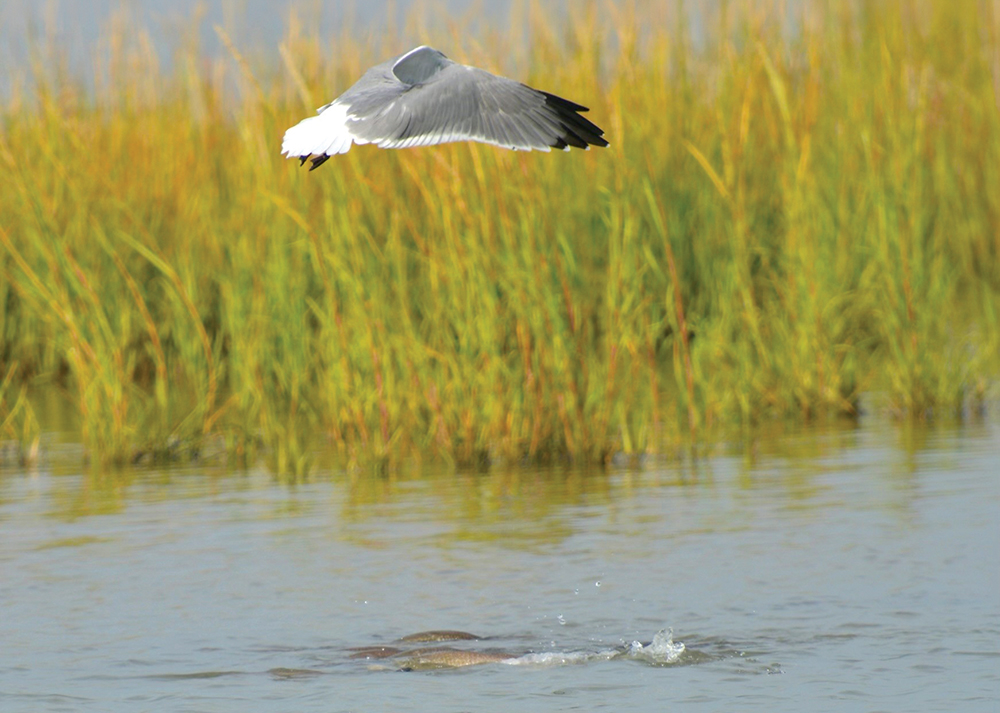
Locating fish is typically easier this time of year as well. With water temperatures dropping, algae suspended in the water column will fall out. Which in turn greatly increases the range of visibility in marshy areas. This helps immensely on days when the fish are not wanting to school, and you can spot singles slowly swinging on bottom. However, when the redfish are schooling as they should be, they can be often spotted from several hundred feet away, throwing massive wakes, and sometimes with seagulls hovering over them. This is textbook fall fishing in the marsh. Open flats can hold good schools of redfish as well, and if thick beds of seagrass are present, this is where you’ll often find large groups of tailing fish. Looking for mud clouds in otherwise clear water over seagrass is often a clue to help locate tailing fish.
The hottest action each fall starts in the furthest reaches of the marshes and back bays because that’s where the shrimp have been growing. As the cold fronts start to exaggerate the hard outgoing tides that occur this time of year, the hot spots will start to migrate into lower elevations of the marsh. There comes a time usually in late November when we will get a legitimate norther that will blow the water to negative levels and holds it there overnight. At this time the shrimp will start working their way out of the back marshes with no intent to return. When this occurs, it’s better to shift your focus to larger/deeper lakes and main bay shorelines.
If you haven’t had the opportunity to go out consistently this fall and are in question of how far back in the marsh you should try and go to look for fish, I would recommend starting in the deeper sections of the lakes and marshes first before going all the way to the back. Mainly because it’s better to find fish on your way in before disturbing them by running on plane and waking out shorelines as you run in. As you approach the initial lakes stop and observe. Look for dead giveaways like low hovering gulls or wakes with shrimp jumping in front of them. Egrets quickly walking the banks can also be worth investigating.
Another thing to consider is when to focus your efforts. It’s not critical to get out at first light this time of year. Instead, I like to focus my attention on the tides. When possible, I try to fish with the falling tide. Outgoing tides give the flushing effect in the marshes that send redfish into a heavy feed. The harder outgoing the better and especially when the north winds give it a little extra push. Some of the hardest feeds for redfish this month will be immediately on the back side of a norther. As soon as the winds subside enough to safely navigate, it’s go time.
Shifting gears, Christmas is right around the corner and if you’re looking to buy a quality gift for a fellow sight-fisherman or maybe even treat yourself, I’d recommend you check out Purpose Built Optics. I gave them a try a few years ago and haven’t looked back. They have approached sunglasses from a different perspective than most companies, focusing on the light waves that the lens lets in, and therefore their glasses produce fantastic color contrast. For sight-fishing, this makes a world of difference. Being able to see a fish easier and further away is everything. The lenses are made of polyamide, which is a type of nylon, making them lighter and more comfortable to wear than glass. The clarity and sharpness of the lens is better than glass, which was one of my biggest concerns. The frames are solid plastic and don’t have large rubber trim parts that will later deteriorate and fall off like other brands.
PBO glasses are marketed by pursuit specific categories – inshore, offshore, and freshwater – tailoring certain base colors that excel in each department. For me, the freshwater lens category has actually been my favorite. The marshy waters I often fish on the Upper Texas Coast typically have darker bottoms and stained water which is probably why. It could possibly just be my eyes liking the brown to yellow base colors. I’m not sure, but they’ve been working great for me, so I’m sticking with it. My absolute favorite lens so far is the Bighorn model which is the brightest lens in the freshwater line up. It’s hard to beat this lens, especially on days with mixed clouds and the light is in and out. This past summer I used the Amistad lens on bluebird days with intense sun and I must admit having that darker lens was very nice. I could go multiple full days in a row without my eyes feeling fatigued at all.
Well, that wraps it up for me until next year. I hope everyone gets to take a few days off this holiday season and enjoy some time outdoors with friends and family. Until next time…