


The Wintertime Dump

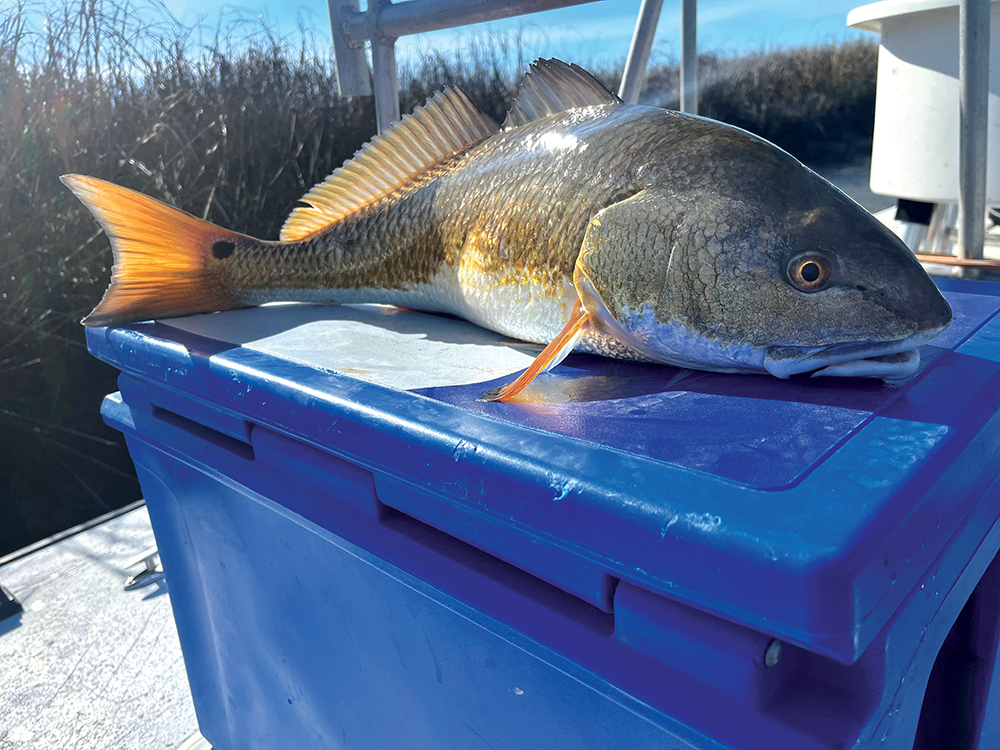
As the seasons begin to change and the temperatures drop, it’s known that fishing often gets better. Shrimp begin to migrate out of their havens in the back marsh and estuaries, but they tend to hold on as long as they can. I mean, who can blame them? I would certainly want to stay in my safe refuge before running the gauntlet to the Gulf. Every predator in the water and above knows that you’re about to be headed their way and will definitely be waiting. As much as they try to stay, Mother Nature has a way of forcing them to make their exit.
When the fall weather patterns begin in earnest, the temperatures begin to drop with the first few cold fronts coming in from the north. It typically is just enough to cool the water off a few degrees and have a minimum effect on tidal movement. However, once the wintertime weather patterns develop more fully, this can really put things into motion. What you will have is a strong cold front making its way down, followed by a few days of strong north to northwest wind. The result of this is that the water will be pushed out more strongly, causing as much as a 2’-3’ tide swing. This is what we like to call “the dump.”
I would also like to note that here on the upper Texas coast, any significant component of east or northeast wind following actual passage of the frontal system will not produce a tide dump. In fact, in some cases, you might even see the tide rising.
Once the dump occurs, as I mentioned earlier, every shrimp, crab, shad and whatever baitfish that was living in the shallows of the marsh have been forced to leave. What you are left with are empty ponds and mud banks. The benefit to this is that the water that flows through the drains toward the larger lakes and main bay areas is now full of hungry fish that have congregated to gorge on the mass exit of forage species.
When it comes to areas to focus on to find these fish, I like to target bayous and larger channels that will feed back into larger ponds. Typically, what I find is that the water in there is very low and it gives you a chance to see every facet and feature of the mud banks and bottoms. With every curve and bend, there is usually a flat before and after the point and redfish will like to crawl up them from the depths. A well-placed lure just on the edge near the deeper water should result in a solid strike. Also, what I have found is that the further you can make it back into the marsh, the better the fishing is. The transition point, where the empty ponds meet the mouth of the channel or bayou, is where the greatest concentration of fish will be found.
One of the other areas I like to focus on are marsh drains along a main lake shoreline. I would consider it to be broken marsh, something that is not big enough for a boat to get into but just right for a kayak, or perhaps a smaller skiff. When that water begins to flow and dump into the lake, fish from all around won’t be far from it. You can cast into the middle of it, drag a lure through there, and it should be a fish on.
There is one thing to take into consideration when going out on dump days and that is the water level and your vessel. Fortunately, I have been stuck more in my kayak rather than my skiff on these days, but it does happen. It can happen fast, too! Not to deter anyone from going, but it needs to be noted and just pay attention to your surroundings. Always know where your deep water is and make note of the water level at the shoreline or some reference point.
I think that there is one aspect to the dump that is often overlooked, and arguably, I believe it is the most important. That is with the water being as low as it is; it gives you an opportunity to see the bottom structure features that are hidden under normal circumstances. As I had mentioned earlier about fishing the flats along the side of the channels, these are fish attractors and valuable for future reference. Also, for an example, take that same channel or bayou and find a straight stretch that seems to be featureless. Once the tide drops, you can see how the deeper water actually flows through that section; it’s not going to be nice and straight. It will curve and wind its way down even though the sides of the bank don’t represent it. The water does not flow straight! With that being said, you can see where all the bottom features have been created by the currents. Always make a mental note, or perhaps snap photo, in order to target them more accurately when the tides return.
The low tide following frontal passages will also reveal lots of reefs, clumps and humps of oyster shell and other features. Once again, these have been proven for me as areas to target, come summer or any time of the year with more normal tide levels. If you are able to make it far enough back into a set of marsh ponds. The extreme low tide will show you where the deepest portions of the channel are located. It will be perfectly carved out of a mud flat and is a perfect area to target once the water returns.
During this time of year, the fishing can be great just about anywhere you go. However, once that big tide dump starts to happen you cannot find a better place than the marsh drains for some truly remarkable fishing. Without a doubt, some of the best days I have ever had have come during these conditions. Not only does it make for incredible fishing but it also gives you a learning opportunity that will help you further down the road.