

Winter – All But
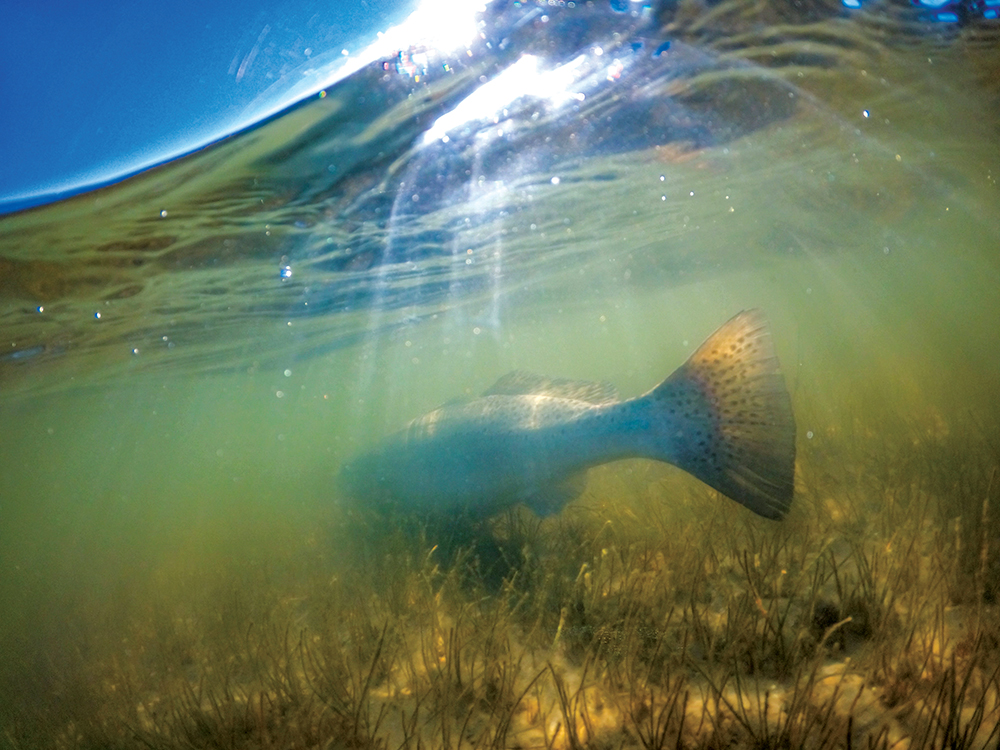
Oz winter trout release.
So far this winter in South Texas, what is usually somewhat mild winter weather has been much warmer than expected. We’ve had only a couple of cool snaps, but no truly cold weather. Mostly, we’ve experienced either spring-like conditions or downright hot weather. This has affected the fishing in both positive and negative ways.
Though November weather on the beaches in the southern parts of our state is typically fairly nice, we do historically start to see some strong cold fronts moving through. The stronger fronts cool surf temperatures dramatically, which activates the hordes of pompano so many of us crave. This season actually started off quite well, with pomps of impressive size showing up in abundance. I landed 75 of the tasty critters over a two-day span. But when warm weather returned in December, the action slowed.
The southerly breezes often associated with warmer winter weather dirty the water just enough to affect our ability to catch fish. This was certainly the case with the early pompano run. On top of that downturn, the early surge of excellent bull red activity also slowed to a crawl. Then, as December wore on, the weather didn’t cool down as expected—it warmed even more, creating confusion among anglers and seemingly dulling the feeding intensity of the fish.
Back in the spring and again through much of this winter, I’ve prioritized targeting the elusive mako shark from the beach. Here in Texas, makos are the Holy Grail of land-based shark pursuits. The caveat is that the window for catching makos from the beach depends on a complex algorithm of variables, including bait presence, water clarity, and water temperature. Recently, water temperatures have been close to ideal several times, only to stabilize above 70 degrees. Nonetheless, I’ve put in a valiant effort, deploying giant baits in strategic fashion.
Though I’ve yet to pull a mako onto the sand, I’ve encountered plenty of other sharks—species that typically disappear from our surf this late in the year. The final month of 2025 was the most active and abundant December I’ve ever witnessed for blacktip sharks, with all sizes showing up regularly and biting aggressively. Shark-fishing enthusiasts need to get down here quickly to experience this action. It’s bizarre to watch six-foot blacktips demolish fifteen-pound baits. In a normal year, peak season for three- to four-foot juvenile blacktips is October, while mature females peak in March or April.
The expected winter takeover of the surf by sandbar sharks never materialized this year. Blacktips, blacknose, sharpnose, and late-season bull sharks took advantage of their absence. One of the strangest anomalies of this winter was a lemon shark caught on Padre Island in December. For those of us who typically target larger sharks, this warm winter has been a hindrance to the mission. Still, as I write this, I’ll continue to pursue winter’s toothy giants with hope.
Away from the beaches, the unusually warm weather has affected other species as well. With exceptionally warm conditions in October and November, flounder in the southern portion of the state lingered in the bays and channels. This caused a backfire of sorts with the standard flounder closure. Around mid-December, when the season reopened, flounder were just beginning their move toward the Gulf, and anglers from the Coastal Bend southward enjoyed excellent action. Rod-and-reel anglers found red-hot fishing at passes and jetties as large females headed offshore to spawn. Gigging also provided ample late-season opportunities. Because flounder are so highly prized—and heavily pressured by guides and commercial fishermen—I believe current regulations deserve reconsideration.
Because winter surf action typically slows during the coldest months, I take that time to climb into the kayak and head into the bays to chase reds and trophy trout. Tide levels and warm temperatures have kept me off the water more than usual this winter, but when I did get out, I fared well—releasing over 100 trout and 40 reds in just two days. Most were modest in size, but I did manage a Texas Grand Slam, landing black drum, flounder, reds, and trout. Normally, late winter is prime time for targeting monster sow trout, but this year I’ll likely be running beach charters, capitalizing on rare opportunities. If I do manage to land another mako from the surf, I’ll know all the tedious preparation and hard work paid off.
This has been an unusually strange winter, and two concerns stand out. The first is the extremely warm temperatures we’re seeing both before and after cold fronts. These conditions often bring thick, soupy fog along the coast. Anglers fishing the beach in dense fog must be extremely cautious. Vehicles traveling the beach may not see camps until they’re nearly on top of them. Setting up camp well away from established traffic lanes isn’t just a good idea—it’s essential.
My second concern—and the larger of the two—is the possibility of a harsh February freeze. Historical patterns show that warm early winters have sometimes been followed by devastating late freezes. With a high volume of mullet still lingering in the bays, basking in warm water, a sudden hard freeze could result in massive fish kills. For now, we’ll keep our fingers crossed and hope Mother Nature spares us the worst. In the meantime, we’ll take full advantage of the hungry fish feeding aggressively during this balmy winter.